
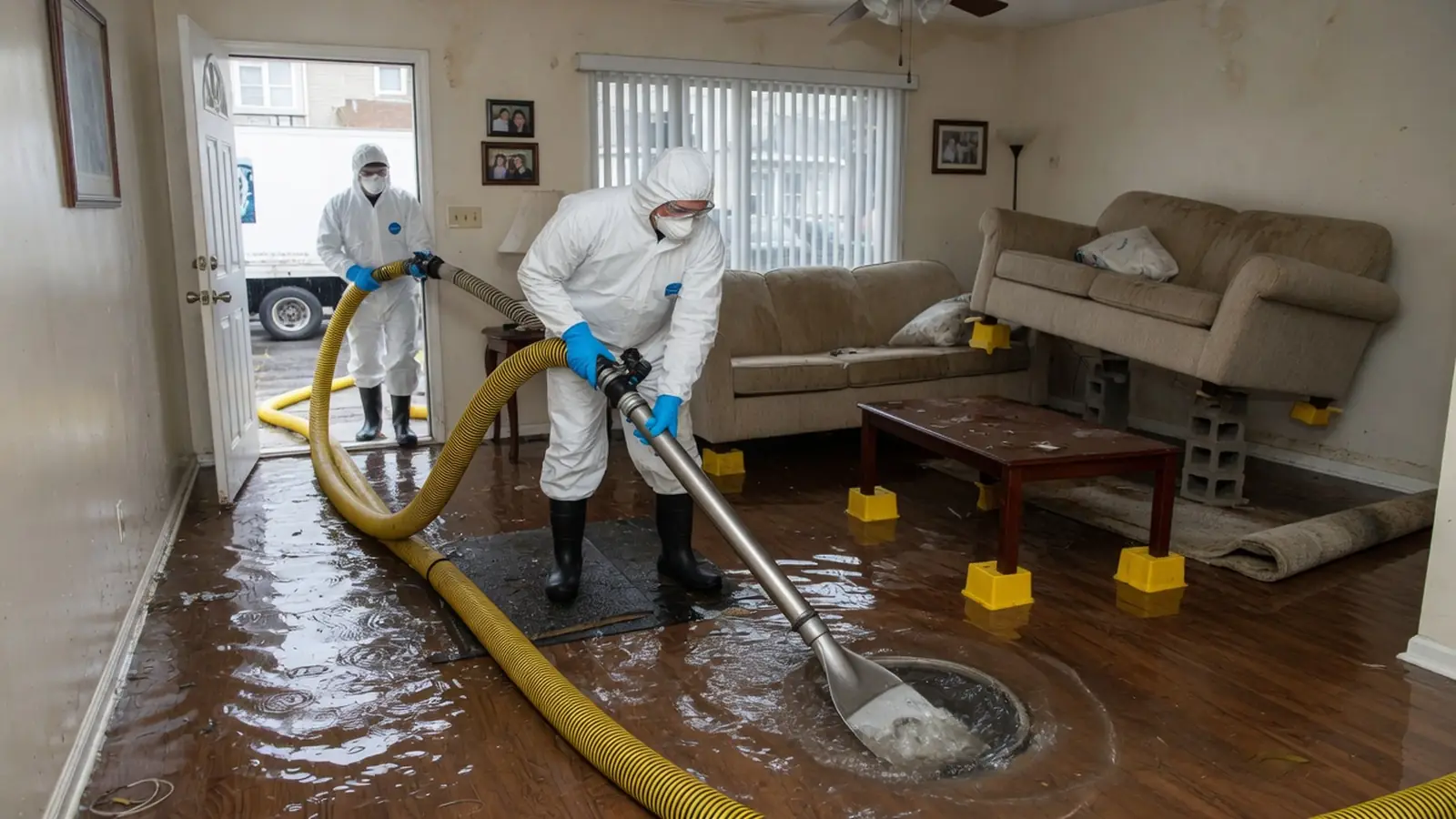
Water Damage Restoration Wilmington NC
A shallow coastal water table often forces groundwater upward through bare crawl space dirt during heavy rain events, creating persistent standing puddles under residential foundations. Our dedicated mitigation technicians extract standing moisture rapidly using industrial pumps and commercial desiccant dehumidifiers to protect your framing. We stabilize humidity levels quickly so your family can return to a safe and dry indoor environment.
If water is moving right now, call (910) 555-0152. We'll help you find the shutoff first.
Prefer to talk? (910) 555-0152
Proven Subfloor Drying And Structural Water Extraction
About 22% of coastal housing units (12,960 of 59,406) were built before 1960, the era of galvanized steel supply lines and cast iron drains that frequently corrode and fail without warning.
Roughly 55% of regional housing units (32,696 of 59,406) were built before 1980, the period when asbestos-containing materials and lead paint were still in use and must be safely managed during tear-out.
Approximately 26% of local housing units (15,658 of 59,406) were built in the 1970s and 1980s, overlapping the years polybutylene supply piping was commonly installed and prone to sudden indoor flooding.
Across local neighborhoods, about 7% of housing units (4,078 of 59,406) were built in the 1960s, overlapping the years aluminium branch wiring was installed, which requires strict electrical safety protocols during drying.
As homeowners often describe during prolonged squalls, intense rainstorms create hydrostatic pressure that forces water through cinder block foundation mortar joints, leaving residents questioning whether interior masonry coatings can stop intrusion without exterior drainage.
When tropical storms push floodwaters inland, property owners can schedule emergency hurricane surge cleanup before structural framing suffers lasting rot.
Our mitigation specialists utilize thermal imaging cameras to track hidden saturation pathways through subfloors before moisture can compromise structural integrity.
We systematically position industrial centrifugal air movers and low-grain refrigerant dehumidifiers to dry framing to safe equilibrium moisture content.
How We Solve Structural Moisture Problems
Pumping standing water from a crawl space without installing a continuous vapor barrier leaves unsealed soil evaporating damp air directly into floor framing. Our certified technicians follow a precise engineering protocol to extract bulk water, stabilize environmental relative humidity, and safeguard your foundation.
- Comprehensive Moisture Mapping. A pattern echoed in public discussions is that severe moisture saturation in crawl space sill beams and framing causes sudden floor deflection and sticking doors, leaving owners unsure if structural repairs can proceed before complete foundation drying. We immediately deploy calibrated pinless moisture meters and thermal imaging to document exact saturation depth before beginning stabilization.
- Standing Water Extraction And Soil Sealing. The shallow coastal water table often forces groundwater upward through bare crawl space dirt during heavy rain events, creating persistent standing puddles. For homes built over damp earth, our specialists remove standing crawl space water and seal exposed soil using heavy-duty poly sheeting to block continuous evaporation.
- Targeted Structural Airflow. We arrange high-velocity commercial air movers along subfloor framing and foundation perimeter walls to evaporate trapped moisture from saturated joists. Constant aerodynamic air exchange accelerates evaporation without warping structural timbers.
- Dehumidification And Daily Psychrometric Monitoring. Mitigation technicians monitor runoff systems carefully, since algae clogs in crawl space dehumidifier gravity drain lines cause unnoticed subfloor relative humidity spikes that trigger rapid mold resurgence. We track daily grains per pound and relative humidity until framing reaches verified baseline dry standards.
Engineered Drying Standards For Coastal Properties
The dominant mapped soils across survey NC129 by acreage are Murville fine sand, Leon sand, Tidal marsh, and Dorovan soils. The single most extensive soil unit mapped around our service territory is Murville fine sand, covering about 16,269 acres of NC129 and holding moisture close to building footings. Because damp ground conditions foster persistent fungi, our team provides certified remediation to eliminate subfloor mold growth under strict containment protocols. We follow IICRC S500 guidelines on every job, verifying moisture reduction with scientific psychrometric logs rather than guesswork.
Emergency Water Extraction
Submersible pumps and high-volume truck-mounted extraction units eliminate standing water from crawl spaces, basements, and living areas. Immediate extraction minimizes water migration into subflooring and sill plates.
Crawl Space Encapsulation And Dehumidification
Local property owners frequently report that air conditioning ductwork under coastal homes heavily condenses humid crawl space air, dripping puddles onto vapor barriers and pushing damp mildew smells through the supply registers. We install continuous twenty-mil vapor barriers and dedicated commercial dehumidifiers to permanently control under-home humidity.
Storm And Hail Water Damage Mitigation
NOAA radar recorded 680 hail signatures within about 15 miles locally between 2021-2025 (2021: 166, 2022: 108, 2023: 86, 2024: 170, 2025: 150). The heaviest recent hail year in our immediate radius was 2024, with 170 radar hail signatures inside a 15-mile radius, prompting delayed attic leaks that demand rapid drying before insulation collapses.
Dedicated Coastal Moisture Remediation Standards
We approach every water intrusion event with scientific moisture tracking, deploying calibrated equipment to protect coastal foundations from structural decay.
- 10Zip Codes Served
- 6Service Areas
- 3Services Offered
Read honest feedback from regional property owners who relied on our mitigation crew to dry flooded structures and protect home foundations.
“Our previous mitigation contractor left soaked insulation torn open across our subfloor and never bothered setting up containment barriers. The crew stepped in, hauled away the contaminated debris, and stabilized our moisture readings within forty-eight hours. They completely rescued our house from what could have been a total mold nightmare.”
Marcus B.
“Getting a straightforward written estimate was such a relief after hearing horror stories from our neighbors about hidden restoration fees. The team walked through every single line item before setting up their drying gear, and the final invoice matched their quote to the exact penny. Knowing there would be zero surprise change-orders gave my family tremendous peace of mind.”
Elena R.
“Every afternoon before packing up for the evening, the crew swept our hallways, vacuumed up loose dust, and neatly coiled all their industrial power cords. Having big commercial dehumidifiers running in your hallway is stressful, but they kept work areas tidy and safe for our dogs. You could genuinely tell they respected our living space throughout the entire drying project.”
Dwight T.
“I never had to call them to ask what was happening with our moisture levels. The team sent photo updates and psychrometric chart summaries every morning by nine o'clock right to my phone. Their proactive communication kept our insurance adjuster fully satisfied without me ever having to chase anyone down.”
Hannah V.
Frequently Asked Questions
Can structural repairs proceed while crawl space sill beams remain damp?
Complete foundation drying must occur before structural repairs begin, as moisture saturation in sill beams causes severe floor deflection and sag. Jacking or sistering joists while wood cell walls remain saturated can cause framing to crack or settle unevenly once drying concludes.
Should crawl space foundation vents remain open after water extraction?
Crawl space foundation vents should remain sealed after water extraction, because humid coastal air prevents structural wood from drying completely. Open vents invite warm ambient moisture that condenses against air-conditioned subfloors, defeating industrial dehumidifiers.
How does older residential plumbing impact water mitigation protocols?
Homes built with older galvanized lines or polybutylene piping require immediate structural drying and careful moisture tracking to prevent rot. About 26% of local residences contain polybutylene lines and 22% feature aging galvanized supply pipes prone to pinhole pipe bursts.
Why do crawl space dehumidifier drain lines clog during restoration?
Algae clogs in dehumidifier gravity drain lines cause unnoticed subfloor humidity spikes that trigger rapid mold resurgence under coastal homes. Regular line clearing and condensate pump checks ensure extracted moisture drains reliably away from foundation footings.
Does pumping standing water alone completely dry a dirt crawl space?
Pumping standing water without placing a continuous vapor barrier leaves bare damp soil evaporating moisture directly into floor framing above. Moisture barriers combined with low-grain refrigerant dehumidifiers are required to pull saturated subfloors down to safe levels.