
Wilmington Mold Remediation
Weeks following flooding or plumbing overflows, homeowners notice warped baseboards and concealed black mold colonies growing along the backside of interior drywall cavities. We eliminate airborne spores and hidden colonies using strict negative air containment and hospital-grade antimicrobial decontamination. Call our local specialists today for immediate property containment and complete environmental restoration.
Call (910) 555-0152 after you've shut the water off, or call first and we'll walk you through it.
Prefer to talk? (910) 555-0152
Meticulous Mold Remediation For Coastal Properties
Persistent coastal humidity accelerates mold growth on damp drywall and framing following water intrusion if indoor humidity remains unaddressed.
Our crews provide comprehensive structural water extraction and moisture drying to stop fungal decay at the source.
During a recent project near Bradley Creek, our technicians sealed crawl space cavities and removed contaminated fiberglass batt without disturbing the home above.
We specialize in subfloor timber sanitization, drywall cavity decontamination, and long-term environmental humidity stabilization.
Every property receives complete moisture mapping and photographic containment logs to ensure complete peace of mind before reconstruction begins.
Our Proven Containment And Decontamination Process
Before sanitizing timbers, we resolve standing crawl space water and damp soil to keep subfloor humidity controlled throughout the treatment process.
- Inspection And Moisture Mapping. Our certified team inspects interior wall cavities and crawl spaces using thermal imaging and moisture meters. A pattern echoed in public discussions is that air conditioning ductwork under coastal homes heavily condenses humid crawl space air, dripping puddles onto vapor barriers and pushing damp mildew smells through the supply registers.
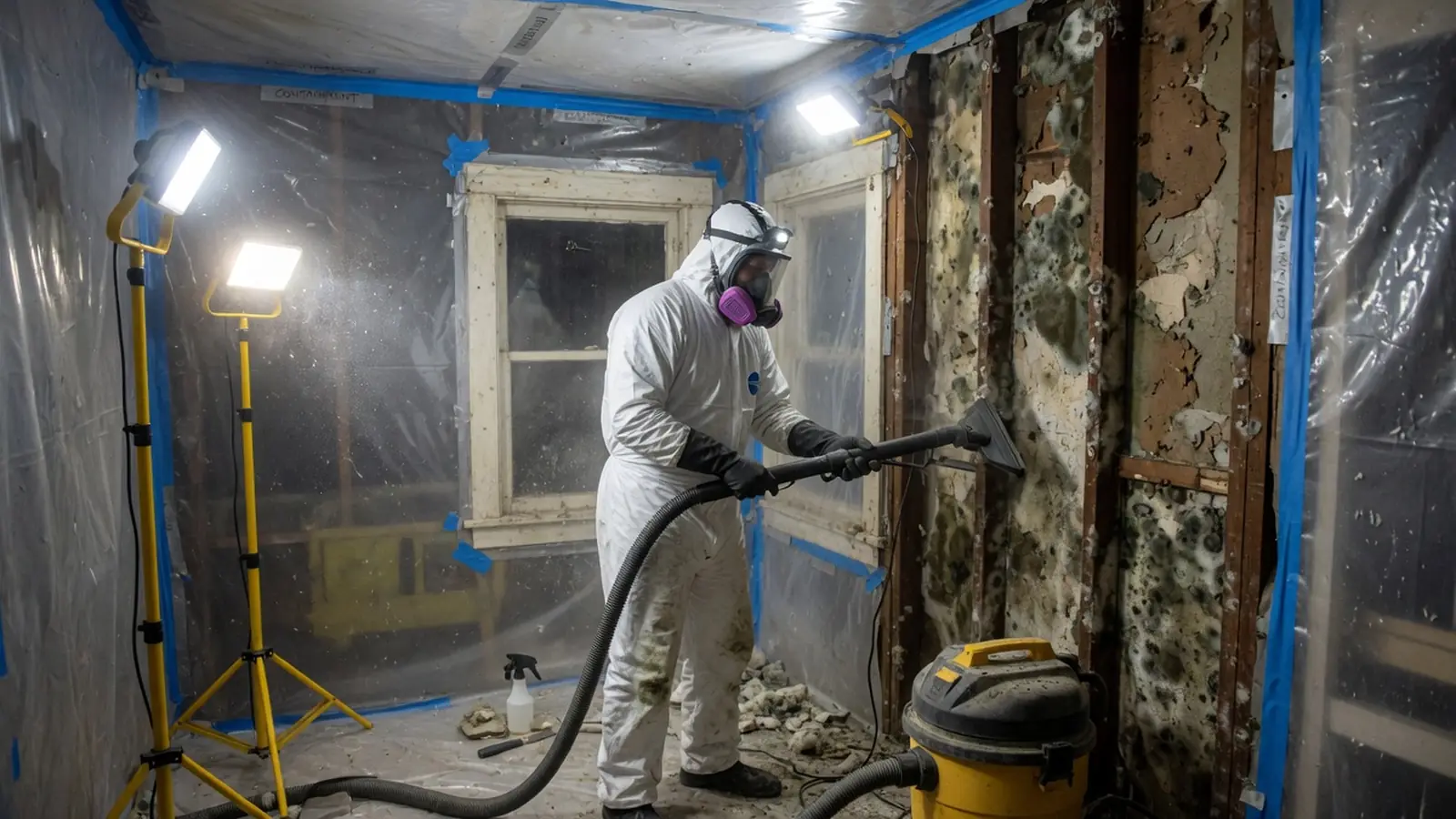
- Negative Air Containment And HEPA Filtration. Professional mold remediation requires negative air containment and HEPA filtration during tear-out so dislodged fungal spores do not spread to clean rooms. Technicians isolate entry points with critical poly barriers and exhaust filtered air directly outside.
- Microbial Removal And Timber Treatment. We physically remove unsalvageable porous elements like contaminated drywall, then HEPA vacuum and treat remaining structural lumber with EPA-registered fungicides. Technicians hand-sand difficult framing joints to eradicate deep hyphae before applying preventative sealants.
- Dehumidification And Verification. Commercial desiccant dehumidifiers run continuously to pull deep structural moisture out of framing until wood reaches safe moisture content levels. We perform final visual assessments and provide comprehensive documentation proving the structure is sanitized.
Uncompromising Containment And Craftsmanship Standards
For severe storm intrusion, our team coordinates emergency hurricane surge cleanup and structural dewatering to protect foundation framing from toxic contamination. We stand firmly behind our strict remediation protocols by using hospital-grade HEPA filtration, laboratory-tested antimicrobial solutions, and thorough containment practices that eliminate cross-contamination risks for every homeowner.
Crawl Space Mold Abatement
Air conditioning ductwork under coastal homes heavily condenses humid crawl space air, dripping puddles onto vapor barriers and pushing damp mildew smells through the supply registers. We clean affected subflooring, sanitize duct exteriors, and install heavy-duty barriers to keep foundations dry.
Interior Drywall Cavity Remediation
Persistent musty odors inside the living area often lead homeowners to discover widespread white fungal growth across crawl space subflooring and framing, prompting concerns over structural decay versus surface remediation. We open affected drywall cleanly under containment and sanitize studs with penetrating antimicrobials.
Moisture Control & Resurgence Prevention
As homeowners often describe in public discussions, algae clogs in crawl space dehumidifier gravity drain lines cause unnoticed subfloor relative humidity spikes that trigger rapid mold resurgence. We flush condensation drainage pathways, install automatic shutoff safeguards, and calibrate mechanical drying systems to keep crawl space humidity below critical thresholds.
Our Commitment To Mold Remediation Standards
We approach every microbial contamination project with strict engineering controls, negative air containment, and thorough substrate decontamination to ensure living spaces remain safe and clean.
- 12Zip Codes Served
- 8Service Areas
- 3Services Offered
Local property owners rely on our certified remediators to eliminate structural mold and restore clean indoor air. Here is what homeowners share about our containment standards, prompt scheduling, and meticulous timber treatment.
“Another contractor offered a lowball estimate that merely involved spraying bleach over our damp joists without any containment. The crew explained why negative air containment and HEPA filtration were required to protect our living room, saving us from a massive contamination nightmare. Their thorough approach was worth every extra penny for genuine peace of mind.”
Marcus T.
“When our municipal clearance inspection was scheduled, the team already had all the containment barriers and disposal documentation completely organized. The inspector signed off on the environmental clearance testing immediately without a single revision or delay. Having them manage the documentation properly made our remodel rebuild proceed effortlessly.”
Elena R.
“We spotted black fungal growth behind our pantry drywall late on a Sunday evening and reached out in a panic. The crew answered right away, arrived with industrial air scrubbers within hours, and secured the area before our kids woke up. Getting immediate help over the weekend kept the spores from circulating through our central HVAC system.”
Bradley H.
“Looking closely at the framing after remediation, I was amazed by how clean and smooth every timber stud looked. The crew hand-sanded the subfloor seams, vacuumed every tight joist junction with HEPA filters, and applied an immaculate antimicrobial sealant coat across every surface. You could see the incredible pride they took in treating the wood down to the smallest detail.”
Gretchen S.
Frequently Asked Questions
Can mold on wooden structural framing be cleaned with household bleach?
Bleach cannot penetrate porous lumber, so structural framing requires EPA-registered antimicrobial agents to eradicate roots and prevent regrowth. Standard bleach evaporates quickly on wood surfaces while leaving fungal root systems intact, which is why our remediation specialists exclusively apply penetrating EPA-registered fungicides.
Why do persistent musty odors lead to white fungal growth under the subfloor?
Persistent musty odors inside the living area often signal widespread white fungal growth across crawl space framing that requires remediation. Homeowners often describe how persistent musty odors inside the living area lead them to discover widespread white fungal growth across crawl space subflooring and framing, prompting concerns over structural decay versus surface remediation.
Can wet crawl space insulation be dried or must it be removed?
Following crawl space water intrusion, soaked fiberglass batt insulation cannot be dried mechanically and must undergo full tear-out and removal. Following crawl space water intrusion, fiberglass batt insulation acts like a wet sponge against the subfloor, raising concerns about whether mechanical drying can save the material or if full tear-out is required.
How long does professional structural mold remediation typically take?
Most residential containment and remediation projects require two to four days to complete tear-out, antimicrobial application, and drying. Timelines depend on the scale of timber contamination and the drying time needed to bring structural moisture levels below standard thresholds.
What clearance documentation is required after residential mold removal?
Post-remediation clearance requires independent visual inspection and air quality sampling verifying spore counts align with outdoor baselines. We provide comprehensive job logs and moisture mapping records to confirm structural cavities are thoroughly clean and dry before reconstruction.